
“I shall not
waste my days by trying to prolong them. I shall use my time.”
From
James Bond’s Obituary
Let me use my time to discuss the new Bond movie, Skyfall. I saw Skyfall
as an Imax, 4G video and a regular movie. I’ll tell you about the differences
in a moment.

I have been a fan of Ian Fleming and James Bond since
November 1963. My friend Stuart Ratner
loaned me the book Casino Royale,
the first James Bond book Ian Fleming wrote.
I was hooked. Before I saw my
first Bond movie in 1964, Goldfinger,
I had read all the books then in paperback that had been published. The next
year, Dr. No and From Russia With Love were re-released
as a double feature and I saw them at the Midway theatre in Forest Hills. The Bond paperbacks were published by Signet,
which was owned by the same company that owned DC comics. They cost 50 cents
each at the time. I had to save up
money, $4.50, to buy the hardcover You
Only Live Twice when it was released in April of 1964. The
Man with the Golden Gun was published, posthumously, a year later. The
first hardcover edition of Octopussy (1966) contained that short story and The Living Daylights The next edition
added The Property of a Lady, and
the final edition reprinted an interesting story from Fleming’s Thrilling Cities, 007 in New York.
I loved the movies, their stories, their music and most
important, their Bond: Sean Connery. Connery was great, sophisticated, funny
and tough, a great actor and a wonderful personality. But he did not play the
James Bond of the books. That Bond was far less attracted, not so much
sophisticated but a snob. The book Bond looked forward to retirement, wondered
how many missions he had left and what his pension would be. If he had a sense
of humor, it was a hard to find. Bond,
and Fleming, was also a bit racist. About black people Bond would say that they
all believed in Voodoo, but he wasn’t really kind to people born outside the
United Kingdom (and even some parts of it.) The books were fun and compelling
and with On Her Majesty’s Secret Service
and You Only Live Twice, rather
haunting.


Daniel Craig hits the Bullseye of James Bond of the books,
he is right on. I dismiss people who feel that an actor has to look just as
they imagine the character; I feel that a good actor, like Craig, can convince
you that he is Bond. Craig, shorter,
thinner and less powerful than Connery gives Bond the vulnerability the
character needs to show depth. Before Craig, Timothy Dalton gave some of these
qualities to the character and I really enjoyed his interpretation. Sadly, due
to many factors including troubled finances and a uncommon very violent plot to
License to Kill) Dalton left the
role. Let me mention something about that. Albert Broccoli, the Bond producer
wrote in his autobiography, that after A
View to a Kill he asked Roger Moore to announce that he was quitting the
role. Moore had grown a bit too old and heavy to continue, but Broccoli did not
want to embarrass him, so he asked Moore to resign. Roger Moore in his autobiography denies this,
by the way. So I don’t know if Dalton left voluntary or was asked to resign.
I feel that both George Lazenby and Pierce Bronson were cast
to replace Sean Connery and play him, not James Bond. Bronson did a good job at
that, even though his movies were very formula. George Lazenby committed
professional suicide and cost the franchise millions of dollars by resigning.
If you read the book, On Her Majesty’s
Secret Service, you’d know that James Bond gets married. Then, in the next
and final chapter, Tracy, his bride is killed by Blofeld. A great end for the
book, but downer endings kill movies.

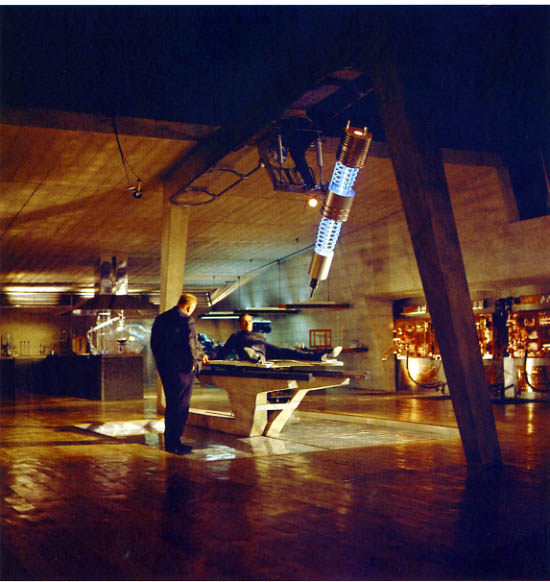
 The producers set it up for OHMSS to end with their wedding and for the NEXT movie to open with
Tracy’s death. By announcing he would not do a second movie, they had to tack
on the sad ending. The movie did 25% less business than You Only Live Twice its predecessor. Lazenby wouldn’t promote the
movie and talked badly against it. Of course, it ruined his career. OHMSS is a hard
movie to evaluate. It was one of the
best written and filmed, had the best Bond girl, Diana Rigg, a great actor as a
villain, Telly Savalas, and a wonderful character actor, Gabriele Ferzetti playing a kind and friendly
gangster who killed people. Yet Lazenby, who certainly looked the part
of a Connery replacement, was not yet an actor. He was not convincing in many
scenes, but showed potential in others.
The film begins with a major flaw.
Bond and Blofeld meet in You Only
Live Twice, yet the two appear as strangers here. That doesn’t make sense in a movie that
deliberately references every other Bond film.
The producers set it up for OHMSS to end with their wedding and for the NEXT movie to open with
Tracy’s death. By announcing he would not do a second movie, they had to tack
on the sad ending. The movie did 25% less business than You Only Live Twice its predecessor. Lazenby wouldn’t promote the
movie and talked badly against it. Of course, it ruined his career. OHMSS is a hard
movie to evaluate. It was one of the
best written and filmed, had the best Bond girl, Diana Rigg, a great actor as a
villain, Telly Savalas, and a wonderful character actor, Gabriele Ferzetti playing a kind and friendly
gangster who killed people. Yet Lazenby, who certainly looked the part
of a Connery replacement, was not yet an actor. He was not convincing in many
scenes, but showed potential in others.
The film begins with a major flaw.
Bond and Blofeld meet in You Only
Live Twice, yet the two appear as strangers here. That doesn’t make sense in a movie that
deliberately references every other Bond film.
The campy humor that was to dominate, at times, the entire
Roger Moore run, really began in Connery’s last movie, Diamonds are Forever.
Moore saw the character as more of a comic book hero than I did and played it
that way. My favorite Moore movie was For Your Eyes Only, where he played it
straight and showed what a good actor he was.
This was Moore’s least favorite movie, by the way. Yet the Moore years, and it lightheartedness,
got the franchise through an era that saw great changes in racial attitudes, woman’s
roles and the collapse of the cold war. Maybe no one could have done it better.

Did you know? When Piece Bronson could not take the role of
Bond because of his contract with NBC, Lazenby called up the producers and asked for
the job?
Did you know? At the 50th anniversary of the Bond
movies, Lazenby showed up and behaved. The producer, Barbara Broccoli, daughter
of the original producer, said, “Congratulations George, you’ve grown up.”
Did you know? Although EON productions produced the 23 Bond
movies we know, they did NOT produce Never
Say Never Again…but they got a share of the profits. And now they own the
movie.
Did You Know? Ian Fleming, in 1954, sold his rights to Casino Royale and Moonraker to CBS in hopes of making it a TV series. After CBS aired an Americanized “Jimmy” Bond
and decided to go no further, Fleming bought the Moonraker rights back but not
Casino Royale. He thought it was too violent and sadistic to be made into a
movie.
Did you know? The rights battle continued until the early
2000s when Sony “traded” their rights to Casino Royale to MGM and EON for the
rights to another movie. The movie
rights MGM traded away? Spider-Man!!!!
They both did OK!
It is difficult to briefly tell
the story of Thunderball and Never Say Never Again, but let me try.
Fleming failed to sell the Bond books to the movies and then hired Kevin
McClory and Jack Whittenham, in 1959, to help write a screenplay which
eventually became Thunderball. They
were fearful that the Cold War would soon be over, so they gave Bond another
villain: No, not SPECTRE but the Mafia!
When the union broke up without results, Fleming took the screenplay and
wrote the novel Thunderball and
published under his own name. Fleming changed the Mafia to SPECTRE but when you read the book or see the movie, notice that the characters are overwhelming Italian.
McClory sued and his name and
Whittingham’s were added to the book. When the movie was produced McClory,
claimed ownership to Thunderball and threatened to do a competing movie, so EON
made him the producer of this film.
Contractually, he also would be allowed, ten years later, to make his
own film, which he did. NSNA was
released a little after Octopussy, but Octopussy did better at the box office.
McClory then continued his lawsuit. Because of these legal proceedings, SPECTRE and Blofeld were dropped from the movies.
McClory then continued his lawsuit. Because of these legal proceedings, SPECTRE and Blofeld were dropped from the movies.
Sony bought McClory’s rights and
the rights to the 1968 Casino Royale and contended that they had the right to
make their own series of Bond movies. MGM sued and won but reached an agreement
with Sony. Note that since Casino Royale,
Columbia Pictures, owned by Sony has been a partner in production and
distribution.
(230 words. Not bad)
Let me break down the Bond movies by my ratings and see if
you agree:
4 Stars:
Doctor No
(Although
if released today it would be a 3 star movie)
From Russia with Love
Goldfinger
On Her Majesty’s
Secret Service
(Worst James
Bond, Best Bond girl, great story and follows the book)
Casino Royale (Craig)
Skyfall
3.5 stars:
For Your Eyes Only
Die Another Day
(A four
star first hour followed by formula.)
3 stars:
You Only Live Twice
Thunderball
Diamonds are Forever
The Spy Who Loved Me
Moonraker
The Living Daylights
License to Kill
Goldeneye
Tomorrow Never Dies
The World is Not
Enough
2 stars:
Octopussy
Quantum of Solace
Never Say Never Again
Live and Let Die
Live and Let Die
1 star
A View to a Kill
The Man with the
Golden Gun
Casino Royale (1968)
Skyfall in Imax has
an incredible picture and soundtrack. The colors were brilliant, the details
were incredible and the surround sound was all encasing. I held onto my chair when some aerial shots
were shown and there was a fight scene in a skyscraper that was unbelievable.
This was a wow!

It was then a disappointed to see the faded, less detailed
and less surround 4G video of the movie and I fear this is the wave of the
future. The movie was great, but the
picture was never as colorful.
The regular film version of the movie was certainly not as
good as the giant Imax picture, but was noticeably better than the 4G (I saw
this and the 4G at the same multiplex). The Imax was certainly worth the extra
few bucks.
Skyfall was a
great James Bond. There is simply no formula here, no silly jokes, no overly
sophisticated, invulnerable superman, they are really starting from scratch. Oh
there is an occasional reference to something we all remember, but, with one
exception, those are really not part of the movie.
Although you might think that by now the movies have nothing
to do with the books, it is not so here. The movie beginning borrowing from the
movie You Only Live Twice and
continues by borrowing from the book, complete with M’s obituary of Bond. The middle very much represents the book of The Man with the Golden Gun, were a
“broken” Bond goes after a killer.

The best part of this movie is the cast. Not just Craig as Bond, but Judy Dench, has her
biggest role since “The World Is Not
Enough. The highlight however is Javier Bardem as Silva. He is a totally
believable, sadistic killer who gives life and a counterpoint to the movie. His
goal is down to Earth, no taking over the planet, and it is actually up to you
to decide whether he succeeds or not.
Ralph Fiennes and Albert Finney have smaller roles, but are
just perfect.
There is one ironic scene that I don’t think is a spoiler if
I mention it, but gloss over this if you’d like. When Dench first appeared as M, she says to
Bond, played by Pierce Brosnan,
M: You
think I'm an accountant, a bean counter. More interested in my numbers than
your instincts.
Bond: The thought had occurred to me.
M: Good,
because I think you're a sexist, misogynist dinosaur. A relic of the Cold War,
whose boyish charms, though wasted on me, obviously appealed to that young
woman I sent out to evaluate you.
Now, 17 years and seven movies later, M must explain to the
British government why MI6 is NOT a relic of the cold war and is still needed.
And she gives a wonderful, direct speech.
OK,
Spoiler Alert!!!!!
You know, this may be considered the first Bond movie where
the villain gets his way at the end. It is also the first Bond movie where the
villain doesn’t die in hand to hand combat.
This is the broken James Bond that we say after his wife’s
death in You Only Live Twice. Still
broken M sends him after an assassin in The
Man With the Golden Gun and that vulnerable is not what we have seen with
Sean Connery or Pierce Bronson.

Bond’s relationship with M is complex and is the thread of
the entire movie. But M is also the thread to the villain, Javier Bardem, and
for the first time in a Bond movie I had some creepy understanding of his
actions and what he wanted to achieve. Because he seemed real and did not have
some abstract goal, but a concrete aim to kill and embarrass M, he was far more
frightening.
For me the single best scene in the movie is when a tied up
James Bond is approached by Silva. Bardem walks the length of a room, with no
cuts, no special effects and just talks. We get to know the character very well
and he just sends shivers up your spine. This was two great actors, but I never
thought for a second they were acting. I
felt I was eavesdropping (and might get caught).
The movie heavily references the obituary, written by M, in
You Only Live Twice. It references
Bonds’ Scottish father (and perhaps Sean Connery) and his mother. Until now,
Bond has had no real backstory on screen. For the first time, a Bond movie
gives us concrete details of his past when we discover that Skyfall is here he grew up.
The movie moves so quickly and so steadily that you don’t
have time to ask the questions of things that don’t make sense….
- How did he survive the fall at the beginning?
- Why did he allow the man to be shot at the penthouse?
- This is not the Aston Martin of Goldfinger, how did it get guns and the other things? (That’s the one part I mentioned earlier)
- How come M, head of security has no security guarding her home?
- How come British parliament had virtually no security and the bad guys were able to enter so quickly?
- How did Silva arrange to tap MI6’s computers when he was out of the loop for over a decade?
- How did Silva arrange perfect drop off times, to the second, after his escape to get his clothes weapons etc?
- Why was Albert Finney at Skyfall at that exact moment? It was an empty building, needing no overseeing?

OBIT from You Only Live Twice
James Bond was born of a Scottish father, Andrew Bond of Glencoe, and a
Swiss mother, Monique Delacroix, from the Canton de Vaud. His father being a
foreign representative of the Vickers armaments firm, his early education, from
which he inherited a first-class command of French and German, was entirely
abroad. When he was eleven years of age, both his parents were killed in a climbing
accident in the Aiguilles Rouges above Chamonix, and the youth came under the
guardianship of an aunt, since deceased, Miss Charmian Bond, and went to live
with her at the quaintly named hamlet of Pett Bottom near Canterbury in Kent.
There, in a small cottage hard by the attractive Duck Inn, his aunt, who must
have been a most erudite and accomplished lady, completed his education for an
English public school, and at the age of twelve or thereabouts, he passed
satisfactorily into Eton, for which College he had been entered at birth by his
father. It must be admitted that his career at Eton was brief and
undistinguished, and after only two halves, as a result, it pains me to record,
of some alleged trouble with one of the boys' maids, his aunt was requested to
remove him. She managed to obtain his transfer to Fettes, his father's old
school. Here the atmosphere was somewhat Calvinistic, and both academic and
athletic standards were rigorous. Nevertheless, though inclined to be solitary
by nature, he established some firm friendships among the traditionally famous
athletic circles at the school. By the time he left, at the early age of
seventeen, he had twice fought for the school as a light-weight and had, in
addition, founded the first serious judo class at an English public school. By
now it was 1941, and by claiming an age of nineteen and with the help of an old
Vickers colleague of his father, he entered a branch of what was subsequently
to become the Ministry of Defence. To serve the confidential nature of his
duties, he was accorded the rank of lieutenant in the Special Branch of the
R.N.V.R., and it is a measure of the satisfaction his services gave to his
superiors that he ended the war with the rank of commander. It was about this
time that the writer became associated with certain aspects of the ministry's
work, and it was with much gratification that I accepted Commander Bond's
postwar application to continue working for the ministry in which, at the time
of his lamented disappearance, he had risen to the rank of Principal Officer in
the Civil Service.
The nature of Commander Bond's duties with the
ministry, which were, incidentally, recognized by the appointment of C.M.G. in
1954, must remain confidential, nay secret, but his colleagues at the ministry
will allow that he performed them with outstanding bravery and distinction,
although occasionally, through an impetuous strain in his nature, with a streak
of the foolhardy that brought him in conflict with higher authority. But he
possessed what almost amounted to "The Nelson Touch" in moments of
the highest emergency, and he somehow contrived to escape more or less
unscathed from the many adventurous paths down which his duties led him. The
inevitable publicity, particularly in the foreign press, accorded some of these
adventures, made him, much against his will, something of a public figure, with
the inevitable result that a series of popular books came to be written around
him by a personal friend and former colleague of James Bond.
If the quality
of these books, or their degree of veracity, had been any higher, the author
would certainly have been prosecuted under the Official Secrets Act. It is a
measure of the disdain in which these fictions are held at the ministry that
action has not yet—I emphasize the qualification—been taken against the author
and publisher of these high-flown and romanticized caricatures of episodes in
the career of an outstanding public servant.
It only remains to conclude this brief in memoriam by assuring his
friends that Commander Bond's last mission was one of supreme importance to the
state. Although it now appears that, alas, he will not return from it, I have
the authority of the highest quarters in the land to confirm that the mission
proved one hundred per cent successful. It is no exaggeration to pronounce
unequivocally that, through the recent valorous efforts of this one man, the
Safety of the Realm has received mighty reassurance.
James Bond was briefly married in 1962, to Teresa,
only daughter of Marc-Ange Draco, of Marseilles. The marriage ended in tragic
circumstances that were reported in the press at the time. There was no issue
of the marriage, and James Bond leaves, so far as I am aware, no relative
living.

By the way, this is my James Bond Collection:
James Bond Novels
Ian Fleming
Casino Royale
Live and Let Die
Moonraker
Diamonds Are Forever
From Russia; with Love
Dr. No
Goldfinger
For Your Eyes Only
Thunderball
The Spy Who Loved Me
On Her Majesty's Secret
Service
You Only Live Twice
The Man with the Golden Gun
Octopussy and The Living
Daylights
Thrilling Cities
Kingsley Amis
Colonel Sun
John Gardner
License Renewed
For Special Services
Icebreaker
Role of Honor
Nobody Lives for Ever
No Deals; Mr. Bond
Scorpius
Win; Lose or Die
Brokenclaw
The Man from Barbarossa
Death Is Forever
Never Send Flowers
SeaFire
COLD
Raymond Benson
Zero Minus Ten
The Facts of Death
High Time to Kill
DoubleShot
Never Dream of Dying
The Man with the Red Tattoo
Sebastian Faulks
Devil May Care
Jeffery Deaver
Carte Blanche
Christopher Wood
James Bond; The Spy Who
Loved Me
James Bond and Moonraker
John Gardner
License to Kill
GoldenEye
Raymond Benson
Tomorrow Never Dies
The World Is Not Enough
Die Another Day
Kate Westbrook
The Moneypenny Diaries
Guardian Angel
Secret Servant
Final Fling
Quinn Fawcett (Ian Fleming; Spy)
Honor Among Spies
Death to Spies
Siren Songs
Bond Reference:
Any Human Heart" Boyd
Art of Bond by Bouzereau
Autobiography of Cubby Broccoli
Being a Scot by Connery
Bond and Beyond by Bennett
Bond and Beyond by Soter
Bond Cars by DK
Bond Films by Smith
Bond Girls are Forever by D’ Abo
Bond Girls by DK
Bond on the Set: Casino Royale
Bond on the Set: Filming Quantum of Solace: Williams
Bond on the Set: Skyfall
Bond on the Set: Die Another Day
Bond on the Set: Quantum of Solace.
Bond Villains: DK
Book of Bond by DK
Book of Bond by James Bond by Barber
Book of Bond: John Pearson
Complete James Bond Encyclopedia by Rubin
Diana Rigg by Tracy
Double O Seven James Bond A Report by O. F. Snelling:
Dresses to Kill
Essential Bond
Fleming’s Jamaica
For Bond Lovers Only by Lane
For My Eyes Only by Glen
For Your Eyes Only Ian Fleming & James Bond Ben Macintyre
For Your Eyes Only, Bond films by Giammarco
Ian Fleming’s Incredible Creation by Various
Ian’ Flemings James Bond by Grisald
Incredible World of 007 Lee/Phieffer
James Bond and Beyond: Ken Adams
James Bond Archives by Taschen
James Bond Bedside Companion by Mead
James Bond Bedside Companion by Raymond Benson:
James Bond by The Legacy by Cork
James Bond by The Man and his World by Chancellor
James Bond by The Spy I Loved. Wood
James Bond Cards
James Bond Dossier by Kingsley Amis:
James Bond Encyclopedia by DK Books
James Bond Films by Rubin
James Bond Girls by Rye
James Bond in Our Sights: A View to a Kill
James Bond in The Cinema by Brosnan
James Bond London by Giblin
James Bond Movie Posters
James Bond Phenomenon by Lindner
James Bond Postcards
James Bond Unmasked by Desowitz
James Bond: The Authorized Biography of OO7
James Bond: The Spy Who Came In With The Gold by Zieger
John Barry by a Sixties theme
John Barry: A Life in Music
Kiss Kiss, Bang Bang by Barnes
License to Thrill by Chapman
Life of Ian Fleming by Pearson
Little Book of Bond
Live and Let Die Tarot Cards
Making of OHMSS by Helfenstein
Making of Tomorrow Never Dies: Peace
Man behind James Bond by Lycett
Man Who Saved Britain by Winder
Man with the Golden Touch by Sinclair McKay
My Word Is My Bond by Moore
On the Tracks of 007 by Mulder
Pinewood Story by Owens
Revisioning 007 by Lindner
Roger Moore’s James Bond Diary by Moore
Rough Guide to James Bond
Sean Connery by Phieffer
Shaken and Stirred: the Feminism of James Bond by Caplen
Spy Who Thrilled Us by Di Leo
The Battle for Bond by Sellers
The Bond Files by Lane
The Music of James Bond
TheWorld is Not Enough Companion. Johnstone
Ultimate James Bond Fan Book
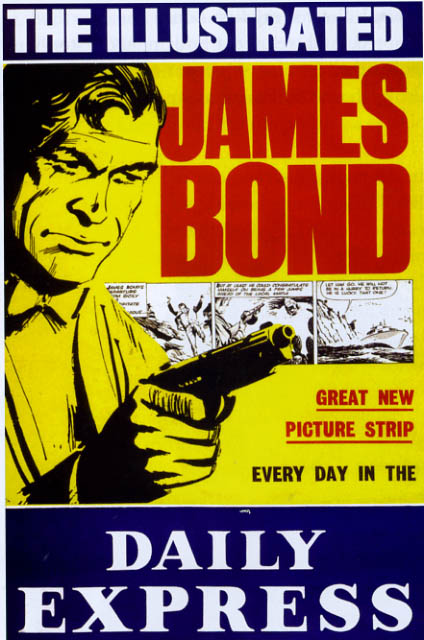
Comics and Comic Strips: Titan Reprints:
The Man with the Golden Gun
The Man with the Golden Gun and
The Living Daylights
Octopussy
Octopussy and The Hildebrand
Rarity
On Her Majesty's Secret Service
On Her Majesty's Secret Service
and You Only Live Twice
Goldfinger
Goldfinger; Risco; From a View to
a Kill; For Your Eyes Only; and Thunderball
Casino Royale
Casino Royale; Live and Let Die; and
Moonraker
Dr. No
Diamonds Are Forever; From Russia
with Love; and Dr. No
The Spy Who Loved Me
The Spy Who Loved Me and The
Harpies
Colonel Sun
River of Death and Colonel Sun
The Golden Ghost
The Golden Ghost, Fear Face, Double
Jeopardy, Starfire
Trouble Spot
Trouble Spot; Isle Of Condors; The
League Of Vampires; and Die With My Boots On
The Phoenix Project
The Phoenix Project; The Black Ru;
Caper; Till Death Do Us Part; and The
Torch: Time Affair
Death Wing
A Death Wing; Sea Dragon; and When
The Wizard Awakes
Shark Bait
The Xanadu Connection; Shark Bait;
and Doomcrack
The Paradise Plot
The Paradise Plot and Deathmask
Polestar
Flittermouse; Polestar; The Scent
Of Danger; Snake Goddess; and Double Eagle
The Girl Machine
The Girl Machine; Beware of
Butterflies; and The Nevsky Nude
Nightbird
Nightbird; Hot Shot; and Ape of
Diamonds
Comic Books:
Doctor No: Showcase DC Comics
For Your Eyes Only Marvel
Octopussy Marvel
License to Kill Eclipse 1989
Permission to Die 1989–1991 Eclipse
Serpent's Tooth 1992–1993
A Silent Armageddon (incomplete)
Light of My Death 1993 Dark Horse
Shattered Helix 1994 Dark Horse
Minute of Midnight 1994 Dark Horse
The Quasimodo Gambit 1995 Dark Horse
GoldenEye (incomplete) 1996
Topps
DVDS
Dr. No
From Russia with Love
Goldfinger
Thunderball
You Only Live Twice
On Her Majesty's Secret Service
Diamonds Are Forever
Live and Let Die
The Man with the Golden Gun
The Spy Who Loved Me
Moonraker
For Your Eyes Only
Octopussy
A View to a Kill
The Living Daylights
License to Kill
GoldenEye
Tomorrow Never Dies
The World Is Not Enough
Die Another Day
Casino Royale
Quantum of Solace
Casino Royale (Climax!)
Never Say Never Again
Casino Royale (1967)
James Bond Story
Bond Girls are Forever
Magazines:
Short Stories:
Short Stories:
Playboy 1/97; 1/99; 4/65
TV Guide 11/99,
James Bond Files
From Russia With Love
Dr No
Live and Let Die


